End-of-Life Care in Remote Communities: What Locum Clinicians Should Know
Content contributed by WMS contractor, Nicki Broby, FNP, and our Founder, Mary Ellen Doty, FNP
There’s a particular kind of quiet that settles over a small remote community when someone is dying.
No transport helicopter on standby. No palliative care team to call. No hand-off to a specialist at the end of a long day. Just you, the patient, whatever supplies happen to be in the clinic, and a community that has been facing mortality with more honesty and grace than most of mainstream America ever will.
For locum tenens clinicians heading into remote Alaska for the first time, end-of-life care is one of the experiences they are least likely to feel prepared for… and one of the most profound they will carry with them long after they leave.
The Reality You Walk Into
Nicki Broby, FNP, has spent years working in remote Alaskan communities as a locum tenens provider. Before that, she logged five years in a pediatric ICU and fifteen in the ER. She is not someone easily rattled by death.
And yet, she’ll tell you: remote end-of-life care is different.
“Working in Alaska means coming to terms with the fact that in certain circumstances you may know what to do to save somebody’s life, and still not be able to save it,” she says.
The constraints are real and they are layered. You may have the right medications, or you may not. You may have the right equipment, or you may not. And even when you have both, you might be the only clinician in the building. You cannot bag a patient, manage a chest tube, run a code, and call for transport simultaneously when there are only one or two of you at the bedside. That is not a failure of skill. It is simply the math of remote practice.
Most locals understand this. One of the things Nicki values deeply about working in these communities is that residents tend to be practical and clear-eyed about life and death in a way that urban settings rarely foster. They live close to the land, close to risk, and, in many ways, closer to mortality than people who have outsourced death entirely to institutions.
A Peanut Butter and Jelly Sandwich 
There is one experience Nicki returns to often when she talks about end-of-life care in remote Alaska.
She was working in a small coastal community of around 600 people when she met an elderly woman who had discovered she had breast cancer and decided, thoughtfully and firmly, not to pursue aggressive treatment. She had already willed her savings to the charitable organizations she loved, and she didn’t want medical bills to diminish what she’d carefully set aside for them. She had made her peace. She was ready. Mostly.
By the time Nicki met her, the cancer had been progressing for about two years. The tumor had grown large enough to become odorous, which was quietly eroding the daily rituals the woman cherished most: walks to the grocery store, afternoons at the library. She was embarrassed. She was frustrated that dying was taking so long — “they made it look fast in the movies,“ she told Nicki, more than once. And underneath the practicality, she was anxious. Her deepest worry, the one she kept returning to, was how God would judge her.
They talked about it many times.
Nicki collaborated with a hospice NP colleague by phone and, together with the patient’s favorite PA who happened to be on rotation, worked out a medication plan for pain and anxiety. They found small ways to help with the tumor odor and wound care. Occasionally, Nicki would happen to drive past the woman’s home after work. She checked in. She showed up when she could.
The morning the woman died, she called 911. Nicki believes she knew death was close and didn’t want to be alone. She was brought into the clinic, and the team took turns sitting with her.
She said she was hungry.
Nicki walked down to the grocery store and bought exactly the right bread and exactly the right jam. She made a peanut butter and jelly sandwich. The woman took two bites.
“I still think it’s the most important PB&J I’ve ever made,” Nicki says.
The woman remained remarkably alert until a few hours before she passed. When she died, she was calm, comfortable, and surrounded by the medical team she had come to love. She died on her own terms, in a community that knew her name.
That is what end-of-life care looks like in remote Alaska. Not a protocol. A relationship.
Death Looks Different Here
One of the most significant shifts locum clinicians report is not clinical, but cultural.
In mainstream America, death is, as Nicki describes it, “whitewashed.” Bodies are quickly transferred to funeral homes, dressed and made up for a viewing that keeps mourners at a careful distance. The process is professionalized in a way that quietly removes the community from the experience of loss. Death becomes something that happens to people, managed by strangers, at arm’s length. Hidden. Hushed.
In the remote communities where Nicki and WMS founder, Mary Ellen Doty, NP, have worked, it is something else entirely. 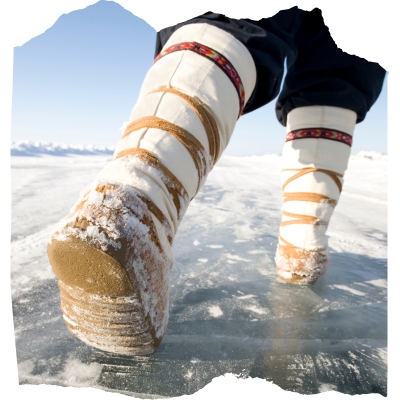
Mary Ellen spent years in interior Alaska, and what she witnessed there has stayed with her. “In many villages, everyone has a role when someone dies,” she recalls. “Certain community members wash the body. Others sew burial clothing — including exquisitely beaded mittens and moccasins made with real care and artistry. A small group of men builds the casket by hand from local birch or spruce. The older women line it with whatever fabric is available and place blankets over the body with tenderness. A team of men digs the grave, building fires over the frozen ground to thaw it, digging as far as they can, then building another fire, repeating the process until a proper grave is ready. The whole community processes together — on four-wheelers, on snowmachines, in pickup trucks — to the cemetery. Everyone has a hand in it, and everyone is connected to it.“
In Tlingit communities in coastal Southeast Alaska, the tradition carries its own profound structure. When a clan loses a member, the sister clan, the opposite moiety, steps in completely. They plan the funeral, host the potlatch meal, and dig the grave by hand. It is an extraordinary act of community service. About a month later, the bereaved clan hosts an even larger potlatch in return, often with gifts, as a formal expression of gratitude.
In another small Southeast coastal town, when a body is carried from the clinic to the cemetery or the airport, locals line the streets. They hold up signs. They cheer. They cry. If the deceased is being flown somewhere else, the community gathers at the airstrip and waves and blows horns as the plane lifts off. It is celebratory and heartbroken all at once. It is nothing like a sullen funeral; it is a true send-off.
For a locum tenens clinician who has spent their career in environments where death is quickly and quietly managed, witnessing this can be quietly transformative.
What This Means for You as a Locum Clinician
If you are preparing for a remote Alaska placement, here are a few things worth carrying with you before you go:
Let go of the idea that you need a system behind you. You will improvise. You will call friends and colleagues for advice. You will do the best you can with what you have. That is not a gap in your competence; it is the work. The communities you serve have always known this, and they will not hold you to a standard that ignores their reality.
Understand that your role may be informal as much as clinical. Walking past someone’s home. Sitting with a patient who doesn’t need medication, just company. Making a sandwich. These are not footnotes to the clinical work, and they may be the most important things you do. 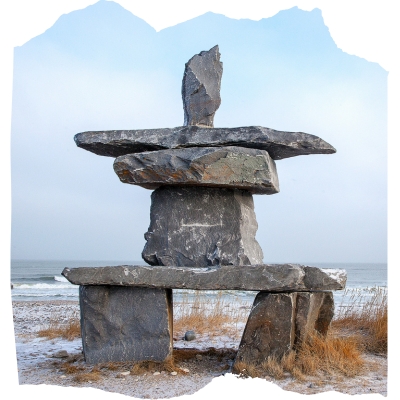
Approach cultural traditions around death with genuine curiosity and humility. You are entering communities with deep, meaningful practices surrounding loss. Your job is not to manage death the way you were trained to manage it elsewhere. Your job is to support this community in the way they need. Ask questions. Listen. Follow their lead.
Be prepared to continue business as usual while the community mourns. When a community loses one of its own, grief is collective and all-consuming. As the locum provider, you may find yourself holding a unique role: keeping the clinic running so that everyone else can be fully present. While your neighbors mourn, you show up. It is a quiet, selfless act; and one that many of our providers find unexpectedly meaningful.
Know that this work will stay with you. Nicki doesn’t talk about that elderly woman as a case study. She talks about her as a person she loved, a friend she was grateful to sit with at the end. The intimacy of remote medicine, in life and in death, is unlike anything most clinicians encounter in conventional practice. This can take some providers aback.
The Privilege of Being There
Nicki describes end-of-life care in remote Alaska as “a sacred opportunity.” That language is chosen carefully.
In a large hospital, a dying patient moves through a system. In a community of 600, or even fewer, they are your neighbor. The clinic is their place of comfort. You are their team. That is a weight, yes. But it is also, as Nicki says, a privilege that most locum tenens clinicians never anticipate, and rarely forget.
At Wilderness Medical Staffing, we work hard to prepare our contracted clinicians for the full reality of remote practice; not just the clinical demands, but the human ones. We believe the right provider, in the right community, at the right time, can make an immeasurable difference.
If this kind of medicine calls to you, or if you need this kind of medicine in your community, we’d love to talk.