
Occupational Health in Alaska Fish Plants: A Locum PA’s Season
Content contributed by WMS contractor Ty Flewelling, PA, reporting from a seasonal clinic at a remote Alaska salmon processing operation.
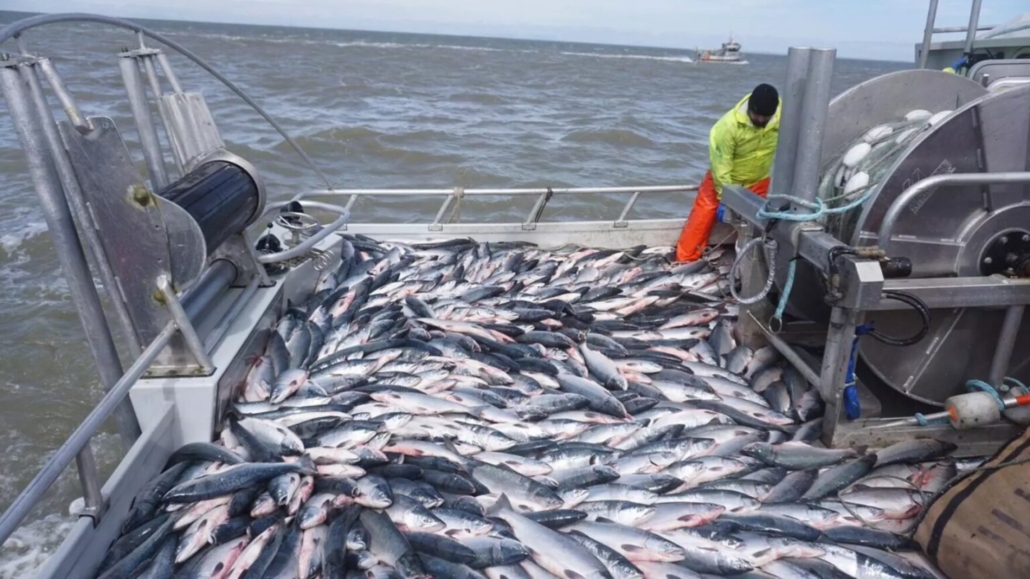
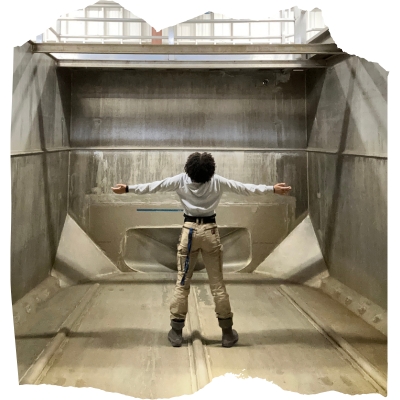
There’s a counter on the processing floor that ticks upward all day, every day, all season. On one afternoon in it’s peak, it read 335,933 fish, at a pace of 96 per minute. That number is the whole story, in a way. It is also just the beginning of it.
Ty Flewelling, PA, has spent this salmon season as the clinic provider for one of the region’s busiest processing plants, treating the workforce that keeps up with that counter. What he’s found is a caseload almost no clinician trains for: injuries and illnesses that exist because of the volume, the hours, and the sheer physical strain of commercial fish processing. It’s occupational medicine at its most hands-on, practiced a long way from the nearest hospital.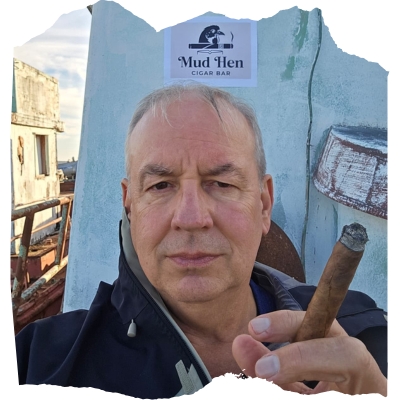
When the Season Turns On, Everything Turns On
“The plant has been in full production since the first of July,” Ty wrote. Three shifts now run 16 hours a day, and his own patient volume tells the story of that ramp-up from the clinic side: from 6-7 patients a day to more than 30, many of them after-hours. He’s come in at 6 a.m., stayed until 8 p.m., and on several nights didn’t leave until 2 a.m. A few mornings, he was called in before 5.
The scale of the operation explains why. The salmon run he’s working alongside stretches for miles along the coast, and this year’s fish have spent 3+ years in open water, making them substantially bigger than in previous seasons. The plant processes Sockeye predominantly, with King, Chum, and Pink salmon handled by hand, non-stop, at up to 900,000 pounds of fish delivered on an average day.
A Caseload Unique to the Job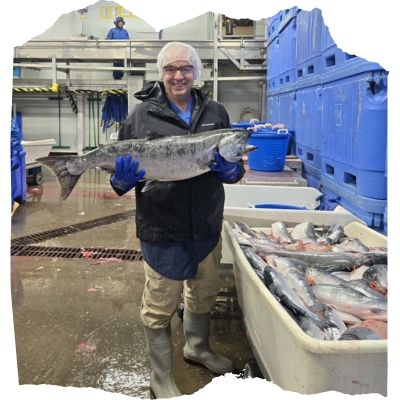
Commercial fish processing has its own occupational illnesses, and Flewelling has seen all of them arrive at his clinic door: Fish Lung, Seal Finger, and what workers call Fish Slime Eye. The common thread is the pace of the work. Rapid processing aerosolizes fish proteins, and those proteins are tough on human lungs and eyes.
Fish Lung is an asthma-like respiratory illness caused by inhaling airborne droplets containing allergenic fish proteins, endotoxins, fish stomach gases, and microorganisms. Repeated exposure significantly increases the risk of occupational asthma.
Fish Slime Eye, medically known as rhinoconjunctivitis, is allergic inflammation of the eyes and nose. Workers inhale aerosolized proteins or parasites (like Anisakis simplex) released during fish gutting. These lodge in the nose and cause retrograde secretions to travel up the lacrimal ducts to the corners of the eyes, producing the green slime and red eyes that give the condition its name.
Seal Finger is a bacterial hand infection caused by marine bacteria, leading to swelling and inflammation. It needs prompt antibiotic treatment because it can be resistant to some medications. Flewelling treated one boat captain who had been out to sea for three days and came in with a hand red and swollen past the wrist. “I drained the pus out of his hand and started him on antibiotics,” he wrote. The captain will recheck with him at his next port call.
The Reality of a 16-Hour Shift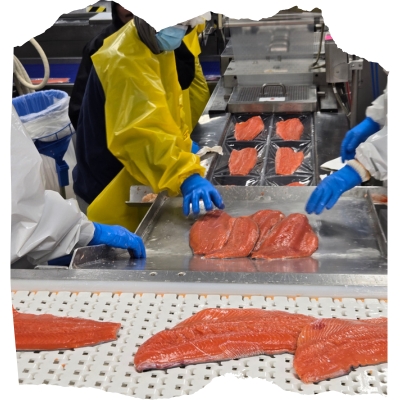
About 60% of the plant’s workforce are first-year processors, and Flewelling has watched the reality of the job sink in. Candidates go through three separate interviews before they arrive, designed to weed out anyone not up to the challenge. Even so, he sees workers every day who are dismayed to find themselves on their feet for 16 hours in a cold, damp, loud environment. As he puts it, “Working 16-hours is not the same as being awake for 16 hours!”
Most first-year processors have very little experience with long-hour factory work, and by about the third day, resignations start rolling in. Leaving early isn’t free, either. Workers who resign have to repay room and board, plus their plane ticket home. For people who came north with little to fall back on, that’s a heavy decision.
The medical screening questionnaire doesn’t always get honest answers, which lands on the aid station. Flewelling has treated a 63-year-old with uncontrolled hypertension on immunosuppressants for a heart transplant, diabetics who forgot their insulin, and workers whose bad backs, knees, and shoulders were never going to hold up to filleting fish all day.
One case has stuck with him all season. A 25-year-old came in mid-asthma attack, wheezing and profoundly short of breath. As rescue medication took effect, Flewelling asked about his triggers.
“I’m severely allergic to salmon,” the worker told him. “But only if I eat it.”
It turned out nobody had walked him through what the job does to the body: working the line means inhaling aerosolized fish proteins and absorbing them through the skin all shift long, whether or not you ever eat a bite. Once Flewelling explained it, the connection clicked. When the worker asked if there was anything that could help, Flewelling answered gently: “There sure is. It is called a plane ticket home!”
The Weight Behind the Humor
Not every story from the season is a punchline. Some processors arrive with nothing to go back to, and for them the pressure of surviving the workday to build a new start has led to panic attacks. For others, the toll is physical. Since the start of this assignment, Flewelling has coordinated medevacs for two hypertensive crises, one heart attack, and a pneumonia case with an oxygen saturation of 50, a level he never knew a patient could reach and still be conscious. All of them survived. None of them finished the season they came up for.
Practicing Within the Limits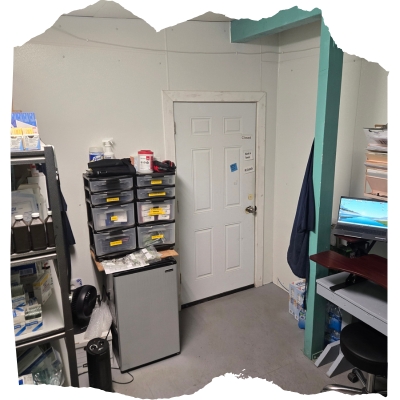
Flewelling is quick to point out the boundaries of his setting. “I have to constantly remind them that I’m an ‘Aid Station’ and not a full-on clinic,” he wrote. “I don’t have a lab or an X-ray machine. While I can do a lot, there is a limit.”
That limit shapes everything. Without diagnostics on site, the work leans heavily on careful history-taking, hands-on assessment, and sound judgment about who can be treated in place and who needs to be moved. It’s a skill set remote providers know well, and one that’s hard to build anywhere else.
What This Looks Like for a Locum Clinician
Flewelling’s season is a useful preview of what occupational and remote medicine can demand:
- You will see conditions you didn’t train for in a traditional setting. Fish Lung and Seal Finger aren’t in most textbooks, but they’re treatable once you understand the mechanism behind them.
- Screening gaps become your problem. Be ready to catch what a questionnaire missed, often mid-shift, with limited diagnostics.
- Scope of practice needs constant communication. An aid station isn’t a hospital, and the people relying on you need to hear that clearly and often.
- Volume can change overnight. Going from single digits to 30+ patients a day means flexibility, stamina, and strong prioritization.
- The work is equal parts clinical and logistical. Coordinating a medevac from a remote plant takes as much skill as the medicine itself.
Every Day Brings a New Challenge
As Flewelling put it, closing out his dispatch: “I can’t wait to see what surprises tomorrow will bring.” That’s the honest version of remote occupational medicine: unpredictable, physically demanding, and unlike anything most clinicians encounter in conventional practice.
If this kind of medicine sounds like the challenge you’re looking for, we’d love to talk.