
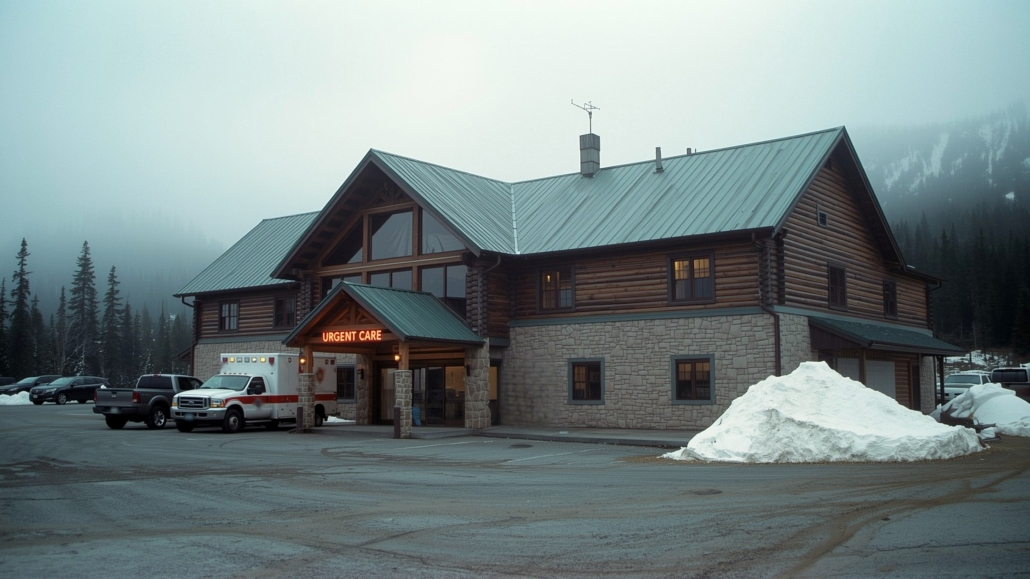
Managing Workload Fluctuations in Remote Clinics with Locum Tenens
It’s early in November. Flu season is picking up, a family nurse practitioner is out on planned leave, and the clinic’s only physician is covering both the walk-in schedule and the ER call rotation. By Friday, routine appointments are booking six weeks out. Five months later, the same clinic will be quiet enough that a second provider would sit idle.
For remote clinics, the difficult staffing question usually isn’t how many providers they need. It’s how many they need this month. Patient volume in rural and frontier communities rarely holds steady. It rises with flu season, tourism, harvest, and hunting season, then drops just as quickly. Meanwhile, a single vacancy or a provider’s leave can take out a third or half of a small clinic’s capacity overnight.
Staffing permanently for the busiest weeks of the year isn’t sustainable on most rural budgets, and running lean through them puts patients and providers at risk. The clinic in our example didn’t really have a staffing problem. It had a planning problem. Nearly everything that went wrong that November could have been seen coming in August.
Why small clinics feel every swing
A swing in demand that an urban practice barely notices can overwhelm a remote clinic. In a three-provider clinic, one leave of absence removes a third of its capacity. In a frontier clinic with a single provider, it can mean sending patients hours down the road.
Many of these clinics start the year already stretched. Some estimates place 66.5% of primary care Health Professional Shortage Areas in rural communities. Behavioral health tells a similar story. As of June 2026, HRSA data shows that 4,311 of the nation’s 7,127 Mental Health Professional Shortage Areas are rural. When behavioral health demand rises in those communities, there’s often no one locally to absorb it, which is why PMHNP and telehealth coverage belong in a surge plan.
Overstaffing to be safe isn’t an option either. The Chartis Center for Rural Health found that 41.2% of rural hospitals operate in the red and that 417 are vulnerable to closure. Carrying peak-season capacity all year is a cost most rural facilities simply can’t absorb. And with the AAMC projecting a shortage of up to 86,000 physicians by 2036, rural facilities will keep competing with larger systems for the same providers.
What’s actually driving the swings?
Workload fluctuations can feel random from inside a busy week. Looked at over a few years, most of them follow the calendar.
Respiratory illness is the most familiar. CDC notes that flu activity most often peaks between December and February, and clinics in the Upper Midwest and Alaska feel it alongside winter weather that makes travel to care harder. Other surges are tied to who is in town. Snowbirds swell the winter population in parts of Arizona, Nevada and southern Utah. Gateway communities near national parks in Montana, Wyoming, Colorado and Alaska see summer visitors fill their urgent care schedules. In the farm country of central Washington, Idaho, Oregon and California, planting and harvest bring migrant and seasonal farmworkers who often arrive with chronic conditions and little continuity of care. Tribal and Alaska Native health systems see their own rhythms around subsistence seasons and community gatherings.
The other half of the equation is supply. Parental leave, CME, retirements and vacations are on the calendar months ahead, and so is the slower attrition of provider burnout when the same few people absorb every surge. When the only CRNA, pharmacist or dentist in town is out, a whole service line can stop.
How can a clinic see a surge coming?
The answer is usually already in the clinic’s own records. Two or three years of weekly visit volume, urgent care or ED encounters, and walkouts will show the shape of the year. Overlay planned leave, CME and contract end dates, and most “surprise” crunches turn out to recur on schedule. Forecasting tools can sharpen the picture, but a spreadsheet is enough to start.
The useful step is turning that picture into a number. Permanent staff should be sized to the volume a clinic sees most of the year. The peaks and gaps are better described in provider-days by role. For our clinic, that might mean about 40 days of NP coverage between November and February. A clinic can budget, schedule, and request coverage against a number like that. It can’t do the same with a vague sense that winters get busy.
When is it time to add coverage?
By the time appointments are booking six weeks out, the moment to act has passed. The better approach is to pick two or three early signals and agree in advance on the threshold that will trigger added coverage.
A common access measure is time to third next available appointment. It tracks the third open slot rather than the first, because a single cancellation can make the next opening look misleadingly soon. Visits per provider per day, weekly diversions or turnaways, and the overtime and extra call shifts quietly absorbed by permanent staff are all worth watching too.
Who should fill the gap?
The strongest surge plans match each gap to the right provider, and the right answer depends on how a clinic is built. In physician-led facilities, adding a locum physician during a surge can take over ER call, higher-acuity patients or procedures, freeing the permanent team to keep up with everything else. Many rural clinics run entirely on nurse practitioners and physician assistants, and for them a locum NP or PA is the natural way to add same-day and urgent care capacity. Across both models, a PMHNP can open up behavioral health access a community otherwise lacks, and a locum pharmacist, optometrist or dentist can keep a service line running that would otherwise close.
It also helps to ask what kind of surge you’re facing. A volume surge, such as a flu season or a summer full of visitors, is mostly same-day and urgent care. It’s well matched to whichever providers already anchor the clinic’s model, whether physician, NP or PA. An acuity surge, such as ski, hunting or highway-injury season, calls for providers comfortable with emergency stabilization and transfer decisions. A service-line gap is narrower: one missing CRNA, pharmacist, optometrist or dentist can stop an entire service, so that single role is the priority. A behavioral health surge, such as a growing waitlist with no local provider, is where a PMHNP, in person or through telehealth, can make the biggest difference.
Building a flex layer that fits the year
Once a clinic knows when it gets busy, how much help it needs and which providers it can use, the coverage model mostly follows. Predictable annual peaks are well suited to a recurring locum tenens rotation, where the same providers return each winter or summer and arrive already knowing the EHR and the referral network. Parental leave or an open position calls for a single locum covering the full block. Ongoing gaps such as weekend call or monthly CRNA surgery days often work best as a shared recurring schedule. Telehealth can extend behavioral health or after-hours triage where no local provider exists.
The common thread is lead time. In remote areas, licensing, credentialing, housing and onboarding all take time, so booking three to six months ahead of a known peak is a sensible rule of thumb. Gaps no one could have predicted will still happen. Knowing your state’s emergency or courtesy licensing options ahead of time keeps a short-notice fill from becoming another scramble.
Back to November
Picture the same clinic with a plan. In August, the administrator pulls the past three winters and sees the same climb starting in late October. The family NP’s leave is already on the calendar. Because they’re in a full-practice state, a returning locum NP who covered last winter is booked for November through February. Third-available appointments are tracked weekly, with an agreed point at which a second locum day is added.
Flu season still arrives early. The NP still goes on leave. But appointments stay within a week, the physician covers call without also running the walk-in schedule, and the clinic doesn’t pay for a second provider through a quiet spring.
Workload swings are part of remote healthcare. The scramble doesn’t have to be. In more than fifteen years of building coverage for rural, remote and tribal facilities, we’ve found that the clinics that weather their busy seasons best decided months earlier how they would.
If your facility is planning for its next busy season and wants to talk through coverage options, our team is always happy to connect.